Visual Tools in Guidance: Mind Maps and Competence Cards in Practice


Visual Tools in Guidance: Mind Maps and Competence Cards in Practice
In recent years, visual tools have become increasingly popular in career and educational guidance across Canada. Whether used in high schools, employment centres, or postsecondary career services, these tools help clients and students gain clarity, structure, and self-awareness in processes that can often feel overwhelming. Two of the most effective visual methods are mind maps and competence cards. Both make it possible to visualize thoughts, experiences, and goals in ways that engage and motivate the individual.
This article explores how these tools can be used in practice—and why they can make a real difference in guidance conversations.
Mind Maps – Giving Shape to Thoughts
A mind map is a visual diagram that organizes ideas, themes, and connections. It usually starts with a central topic in the middle of the page, from which branches with keywords, images, or colours extend outward.
In guidance settings, mind maps can serve several purposes:
- Clarifying interests and goals: Clients can map out what motivates them and which directions feel most meaningful.
- Creating an overview of options: A mind map can bring together education pathways, job types, or skill areas on a single page.
- Reflecting on experiences: By visualizing past experiences, it becomes easier to identify patterns and connections that might otherwise go unnoticed.
Mind maps work well because they engage both analytical and creative thinking. They allow for free exploration while still providing structure. Many Canadian counsellors find that conversations become more dynamic when drawing and writing are part of the process—and that clients feel a stronger sense of ownership over their reflections and decisions.
Competence Cards – A Mirror of Strengths and Experiences
While mind maps are often used to explore and organize ideas, competence cards focus on identifying and making visible what a person already knows and can do. A competence card is a visual overview of personal, social, and professional skills—often represented through symbols, colours, or short descriptions.
In practice, competence cards can be used to:
- Boost confidence: Many people underestimate their own abilities. Seeing their skills laid out visually helps them recognize their true strengths.
- Prepare for job interviews or career transitions: The card can serve as a concrete tool for articulating skills and experiences.
- Facilitate dialogue: Counsellor and client can explore how competencies were developed and how they might be applied in new contexts.
Competence cards can take many forms—from simple templates to creative collages. What matters most is that the card reflects the individual’s self-perception and provides a visual foundation for meaningful conversation.
When the Visual Opens New Perspectives
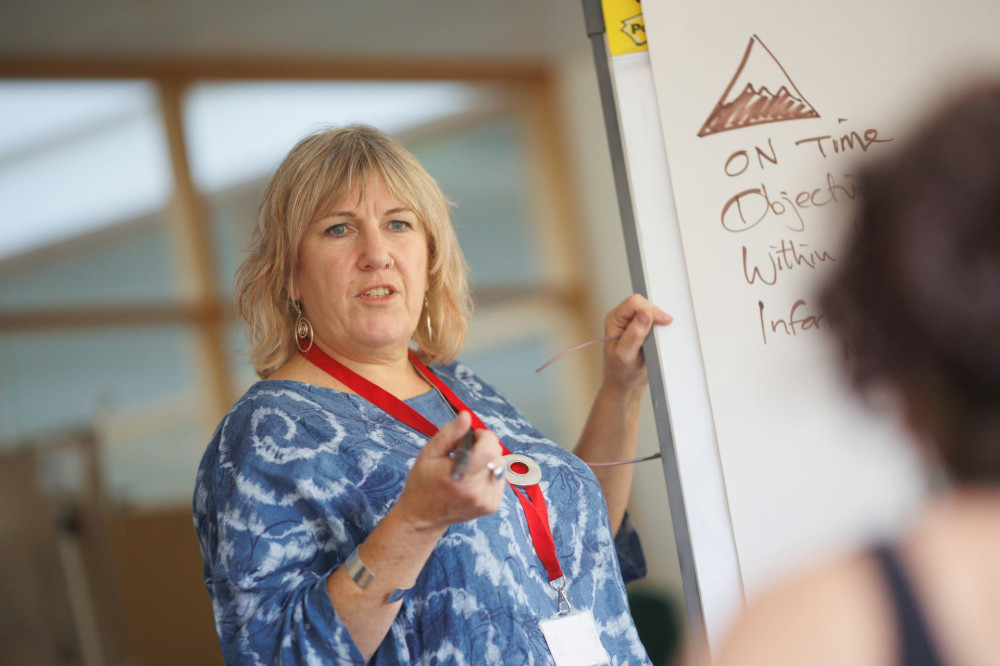
The power of visual tools lies in their ability to make the abstract tangible. They help translate thoughts and emotions into something visible—something that can be moved around, discussed, and reinterpreted.
For counsellors, this means that conversations become more open and exploratory. For clients, it means that reflection becomes easier to sustain—both during and after the session. Many choose to keep their mind map or competence card as a living document, updating it as new experiences and insights emerge.
Læs også:




Getting Started
If you are a guidance professional interested in working more visually, you can start small:
- Begin with paper and markers. It doesn’t have to be digital to be effective.
- Let the client lead. It’s their thoughts and competencies that should take shape—not the counsellor’s.
- Use colours and symbols. These make the visual more engaging and easier to remember.
- End with reflection. Ask what the client sees when the map or card is complete—and what surprises them.
Over time, you can expand to digital tools such as Miro, MindMeister, or Canva, but the most important element is the dialogue that unfolds around the visual.
A Tool for Insight and Action
Mind maps and competence cards are more than creative exercises—they are methods for fostering insight, motivation, and direction. When thoughts and experiences become visible, it becomes easier to act on them.
In a time when many Canadians face uncertainty about education, work, and identity, visual tools offer a simple yet powerful way to create clarity. They help people see themselves—and their possibilities—with fresh eyes.
Læs også: